
The world’s climate future is under discussion in Addis Ababa, Ethiopia, as the Intergovernmental Panel on Climate Change,...


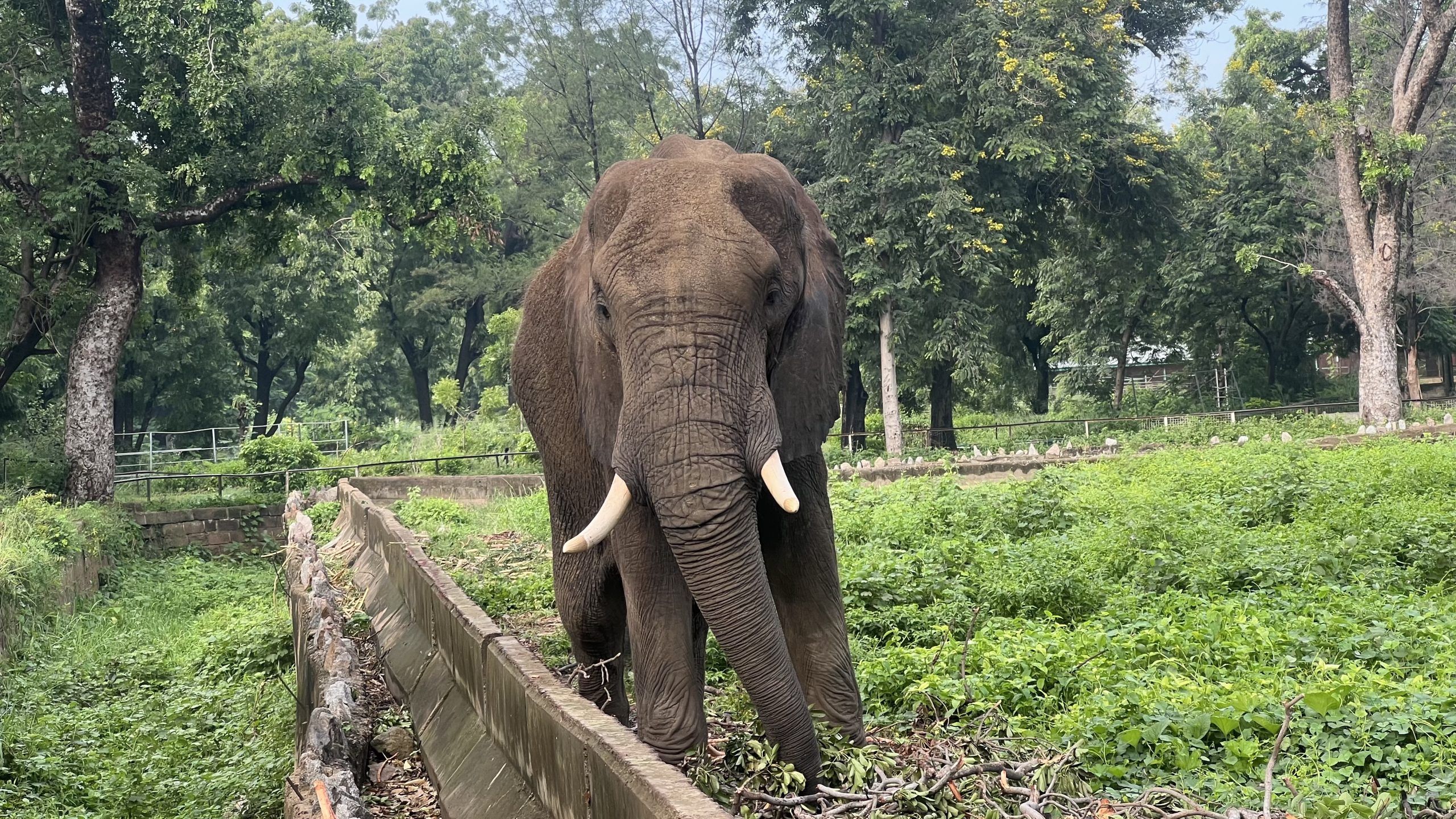
African elephants may be doing something scientists are only beginning to understand: selecting certain plants when they are sick.
A new study from the Mount Elgon region of Kenya, published in Scientific Reports on 24 September 2026, documented local observations suggesting that elephants deliberately consume particular plants and natural materials in circumstances associated with illness or healthcare.
Researchers identified 35 plant species from 23 families, alongside four other natural resources.
The research was built on the knowledge of eight members of the local Sabaot community, each with more than 20 years of experience living or working around elephants.
Their observations associated 25 of the documented resources with possible medicinal functions for elephants. Some accounts were particularly striking, including reports of mothers providing plant material to their calves behaviour scientists describe as possible allo-medication, where one animal provides a potentially medicinal substance to another.
But there is an important scientific distinction. The study does not prove that elephants diagnose illnesses and deliberately cure themselves with particular plants. Instead, it provides evidence of unusual plant selection behaviour that researchers believe deserves further investigation.
Scientists still need direct behavioural observations, chemical analysis and pharmacological studies to establish whether the plants actually produce medicinal effects in elephants.
What makes the discovery even more fascinating is the connection with human knowledge.
Researchers found considerable overlap between plants associated with elephant medicinal behaviour and plants traditionally used by people in the Mount Elgon region.
This suggests that the same landscape may contain knowledge accumulated by both humans and wildlife over generations although the study does not claim that elephants and humans understand or use these plants in exactly the same way.
The findings also raise an important conservation question. If elephants depend on particular plants, forests and mineral-rich places as part of their natural environment, then destroying their habitat could mean losing more than food and shelter. We could also be removing resources that are part of their learned behaviour.
Elephant knowledge, like human traditional ecological knowledge, may be connected to a particular landscape and passed between generations.
This is why the study matters beyond elephants. A forest is not simply a collection of trees. It can be a source of food, medicine, water, climate regulation, cultural knowledge and biodiversity. Some of its value may remain unknown until scientists and communities take the time to understand it.
Protecting ecosystems therefore also protects opportunities to discover what nature already knows.
The question for us is simple: if elephants have learned to search their environment for resources that may help them when they are sick,
what other knowledge is hidden inside the forests we are destroying before we have had the chance to understand it?

The world’s climate future is under discussion in Addis Ababa, Ethiopia, as the Intergovernmental Panel on Climate Change,...
A chronic wound, the loss of livestock, food shortages or the death of a loved one can leave...

Kano State has moved up to third position among Nigeria’s 36 states in the 2026 Subnational Climate Governance Performance...